 Call: (469) 478-0220


- Dallas Based
Serving Dallas–Fort Worth and all of Texas, and traveling for multifamily and commercial projects.
- Free Estimates
Over 14 years of experience, fully insured, residential and commercial. Call (469) 478-0220.
 Dallas Based
 Free Estimates
Quartzite Countertops
Quartzite is the natural stone people choose when they want the white, veined look of marble with far more toughness. Elite Stone Countertop Design fabricates and installs quartzite countertops in Dallas and across Dallas-Fort Worth, for kitchens, islands, bathrooms and outdoor kitchens. With over 14 years of experience, we come to your home for measurements, handle the custom fabrication and the installation, and you work directly with the fabricator. Call (469) 478-0220 for a free estimate.
Quartzite vs Quartz: Similar Names, Different Stones
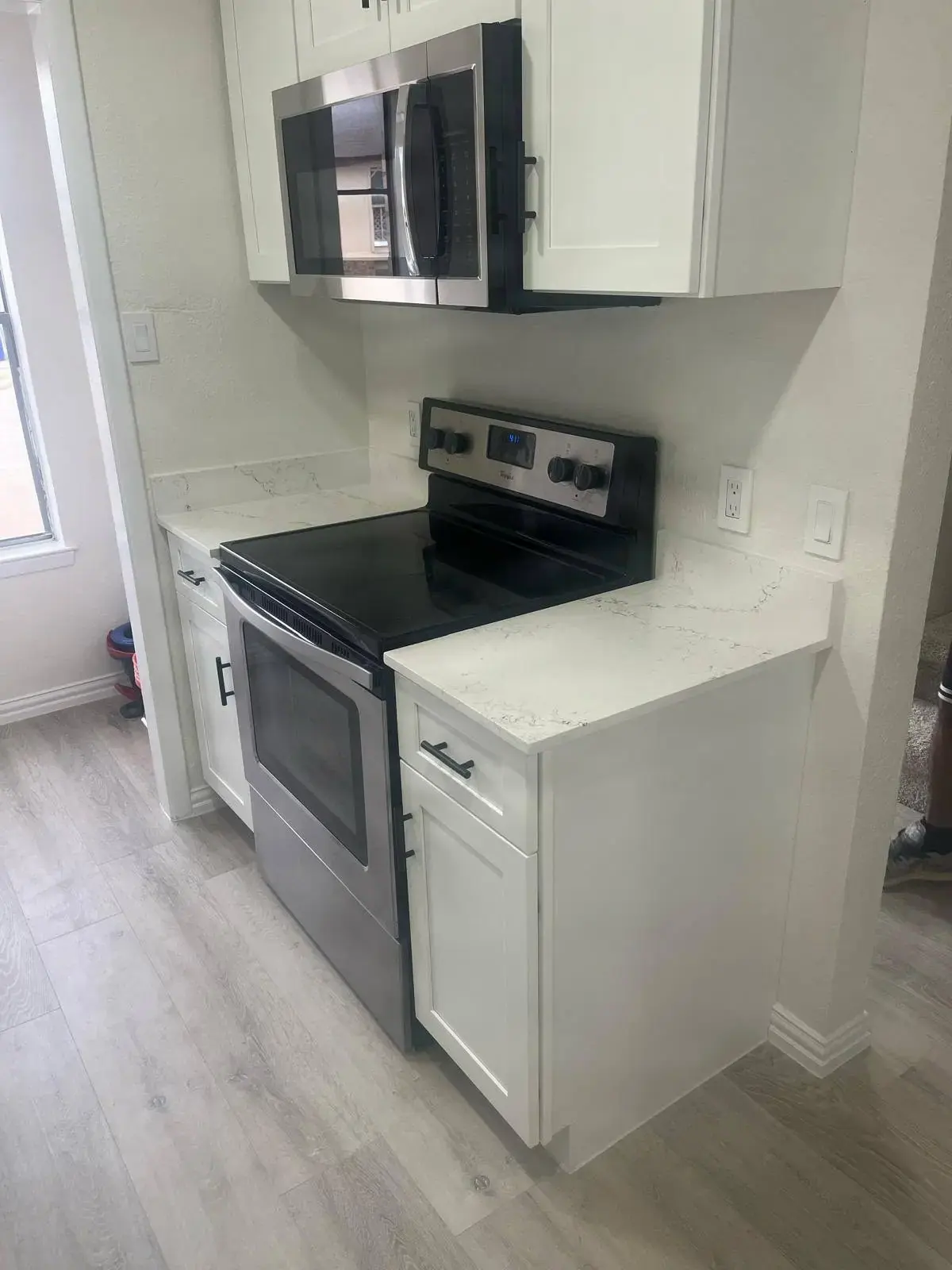
The names sound alike and get mixed up all the time. Quartzite is a natural stone quarried in blocks and cut into slabs. Quartz countertops are engineered: crushed quartz bound with resin and pigment, made in a factory. Our quartz countertops page covers that material on its own.
The resin is where the two part ways in a Dallas house. NOAA's 1991-2020 normals for the DFW airport count 106.2 days a year with a high of 90°F or more, and 20.3 days at 100°F or more. Resin can scorch under a hot pan, and long direct sun through a window or onto a patio can yellow or fade it over time. Quartzite has no resin, so heat and sunlight do not change its color.
The same normals count 29.2 days a year when the low drops to 32°F or below. A dense quartzite absorbs little water, so the freezing nights of a Dallas winter are not much of a threat to a top on a covered patio, especially a sealed one. That is why quartzite works inside the house and out.
What Quartzite Is, and Why Every Slab Is Different
Quartzite starts as sandstone. Heat and pressure deep in the earth fuse its quartz grains into one dense, hard stone, around 7 on the Mohs scale, harder than glass and harder than the steel of a kitchen knife. Other minerals caught in the sand give it color: soft whites and grays, pale greens and blues, and gold or rust streaks where there was iron.
Because it is natural, no two slabs match. The veining that people want, long sweeps of gray or gold across a white field, runs differently through every block. It pays to see the actual slab before it is cut, and on a large kitchen to plan where each piece of the slab lands, so the veins flow across the island and the seams fall where they are least noticed.
Real Quartzite or Marble Sold as Quartzite?

Some stones sold as "soft quartzite" are really marble or dolomite, which look similar but are softer and react to acid. A few simple tests on a sample or the underside of a piece tell them apart, in general terms:
- The glass test. True quartzite scratches a glass tile. Marble does not.
- The knife test. A steel blade will not scratch true quartzite, but it leaves a line in marble or dolomite.
- The acid test. A drop of lemon juice or vinegar left for a few minutes leaves a dull spot on marble. True quartzite stays unchanged.
It matters because a marble-like stone needs marble's care: no acidic cleaners and more patience with etching.
Why Quartzite Takes More Work to Fabricate
Every masterpiece starts with precision. With quartzite that matters more than with most stones, because the hardness that makes it tough on a counter makes it slow in fabrication. Cutting, shaping the edge and polishing all take more time and wear through tooling faster than granite or marble do. Some quartzites also carry natural fissures, which have to be read before a cut is made so a sink cutout or an overhang does not land across a weak line.
That shows up in the edge choices. An eased or square edge is the simplest on a hard stone. A full bullnose or an ogee takes far more passes, and a mitered edge, two pieces joined at 45 degrees to look thick, takes careful work to keep the veins continuous around the corner. Sink and cooktop cutouts get rounded inside corners, which keep stress cracks from starting. Once the top is set, a licensed plumber reconnects the sink and faucet.
Sealing and Care in Plain Words
Many quartzites are porous enough to need a sealer, and some are dense enough to need very little. A drop-of-water test tells you: if water darkens the stone within a few minutes, it is time to seal. A sealer slows oil, wine and coffee from soaking in; it is not a coat that makes the stone stain-proof.
What not to use: strong acids, bleach and harsh ammonia cleaners wear the sealer down, and abrasive powders can dull a polished face. Warm water with a little dish soap, or a pH-neutral stone cleaner, does the daily job. True quartzite takes a hot pan far better than quartz, but a trivet still protects the sealer and spares the stone a sudden shock of heat.
Granite or Quartzite: Which Is Better?
Neither is better everywhere. Both are natural, both take heat and sun, and both are often sealed. The differences:
- Look. Granite is mostly speckled or flecked, in a wide range of colors. Quartzite gives the long, soft veining of marble.
- Hardness. Quartzite is generally a little harder, which makes it tougher on a counter and slower to fabricate.
- Cost. Granite is usually the easier stone to cut and edge, which tends to keep the labor lower.
If you want a white, veined kitchen that takes daily cooking, quartzite is the natural stone for it. If you like a speckled pattern or a darker stone, our granite countertops page is the place to start.
Where Quartzite Works: Kitchens, Islands, Baths and Patios
Quartzite suits a busy kitchen and a large island, where its hardness handles the knives, pots and traffic. It works on bathroom vanities, a laundry room counter and a fireplace surround. Outside, it is one of the natural stones that handle a Texas summer on a covered patio or around a grill; our outdoor kitchen countertops page covers what an outdoor top needs underneath it. We serve homes, builders and commercial projects across Dallas-Fort Worth, from Dallas up to Frisco.
What Decides the Cost of Quartzite Countertops
These are the things that decide what a quartzite top costs:
- The slab. Quartzites vary a lot, and the rarer whites with bold veining sit at the top.
- Square footage. Including extra slab when veins are matched across a seam.
- Edge profile. On a hard stone, an ogee or a mitered edge adds real fabrication time.
- Cutouts and backsplash. Each sink, faucet hole and cooktop opening, and how high the backsplash goes.
- Removal and access. Taking out the old top, and how easily the slabs reach the room.
We work with your budget, and a free estimate after measuring gives you the real number. Call (469) 478-0220.
Ready to Choose Your Quartzite?
Call (469) 478-0220 for a free estimate.
Photos From Our Jobs
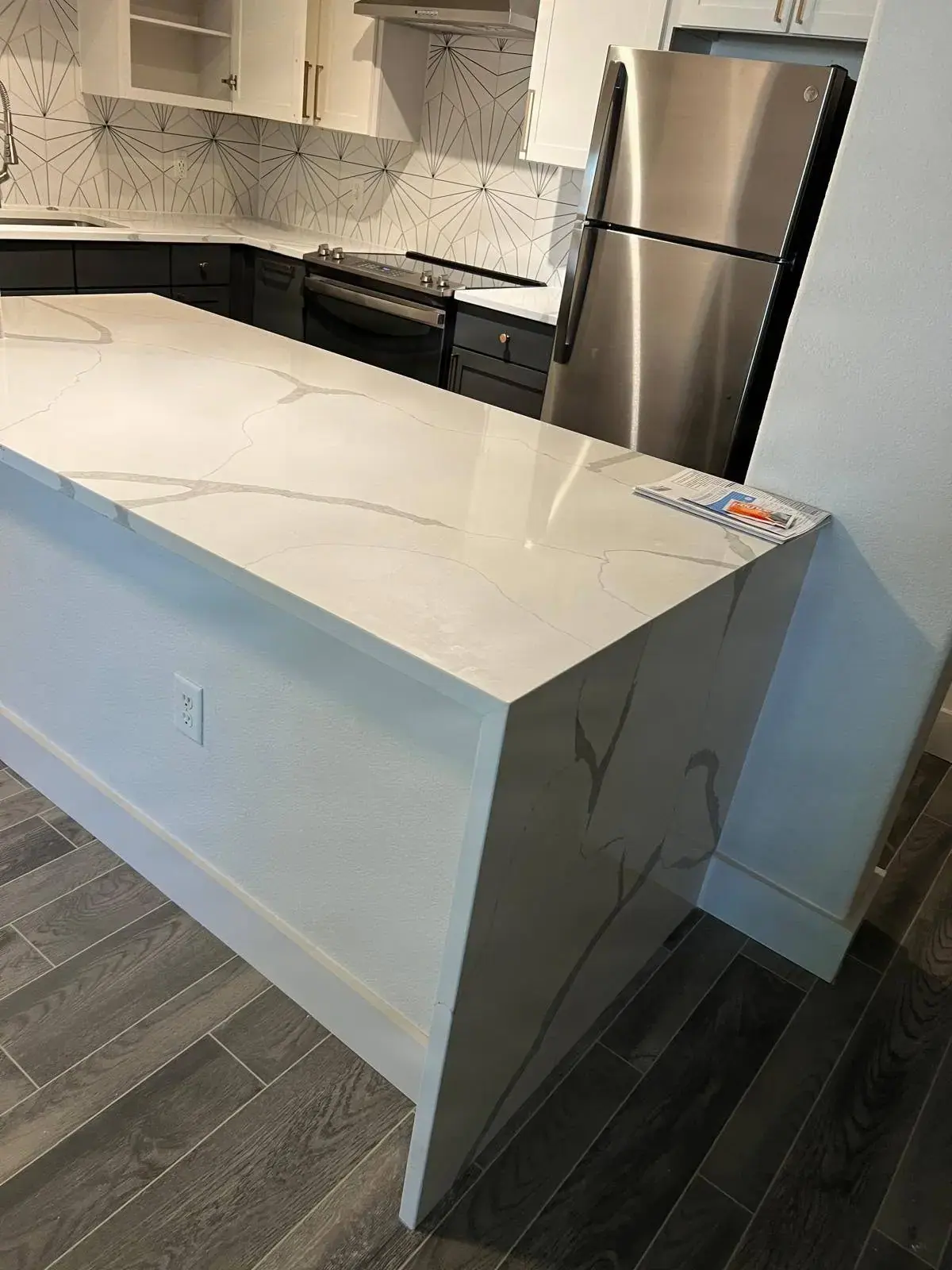
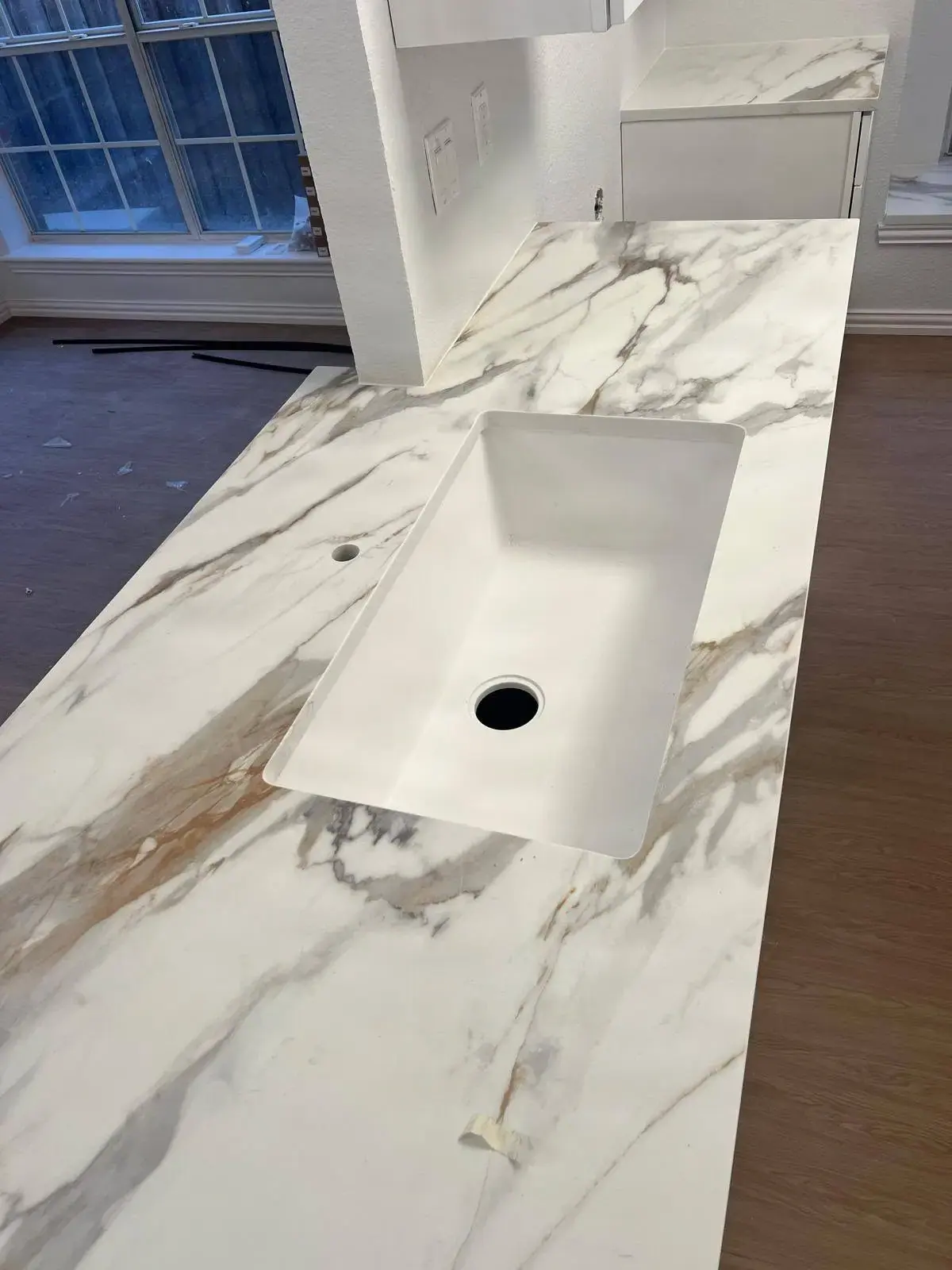
Every photo here is from one of our own jobs. Tap one to see it bigger.






Questions We Hear a Lot

-
No. Quartzite is a natural stone, sandstone fused by heat and pressure, cut from a quarry block. Quartz countertops are engineered from crushed quartz bound with resin. Quartzite takes heat and sun better because it has no resin; quartz needs no sealing and its pattern is more uniform.
-
True quartzite handles heat well, since it is a natural stone with no resin to scorch. A trivet under a very hot pan is still a good habit, because sudden heat can stress the stone and wear the sealer. A marble-like soft quartzite deserves more care than a true one.
-
Skip strong acids, bleach, harsh ammonia cleaners and abrasive powders: they wear down the sealer and can dull a polished face. Warm water with a little dish soap or a pH-neutral stone cleaner is enough for daily cleaning. Wipe oil and wine spills before they sit.
-
Quartzite tends to cost more to fabricate than granite, because its hardness makes cutting and edging slower. The slab you pick, the square footage, the edge profile, cutouts, the backsplash and removal of the old top decide the total. We measure and give you a free estimate; call (469) 478-0220.
-
Yes. Quartzite has no resin to fade or yellow in the sun, and it takes summer heat on a covered patio well. A dense, sealed slab also handles the freezing nights of a Dallas winter well.
-
Yes. Free estimates are available. Call (469) 478-0220 or use the contact form.
-
Dallas, TX and surrounding areas across Dallas-Fort Worth, with town pages for Plano, Frisco, Fort Worth, Arlington and more on our service area page. We also travel for commercial and multifamily projects. Call (469) 478-0220 to check your location.
Ready to Get Started?
Call Elite Stone Countertop Design at (469) 478-0220 for a free estimate.
-
-
- Free Estimates Call, text or email usFully insured
- Find Us Online


