 Call: (469) 478-0220


- Dallas Based
Serving Dallas–Fort Worth and all of Texas, and traveling for multifamily and commercial projects.
- Free Estimates
Over 14 years of experience, fully insured, residential and commercial. Call (469) 478-0220.
 Dallas Based
 Free Estimates
Marble Countertops
Marble is the stone most people picture for a white kitchen or a classic bathroom, and the one that asks the most of the people who live with it. Elite Stone Countertop Design fabricates and installs marble countertops in Dallas and across Dallas-Fort Worth, along with quartz, granite, quartzite and porcelain. We come to your home for measurements, and you work directly with the fabricator, with no contractor in between. Call (469) 478-0220 to talk through where marble fits in your home.
What Marble Is, and Why Acids Etch It
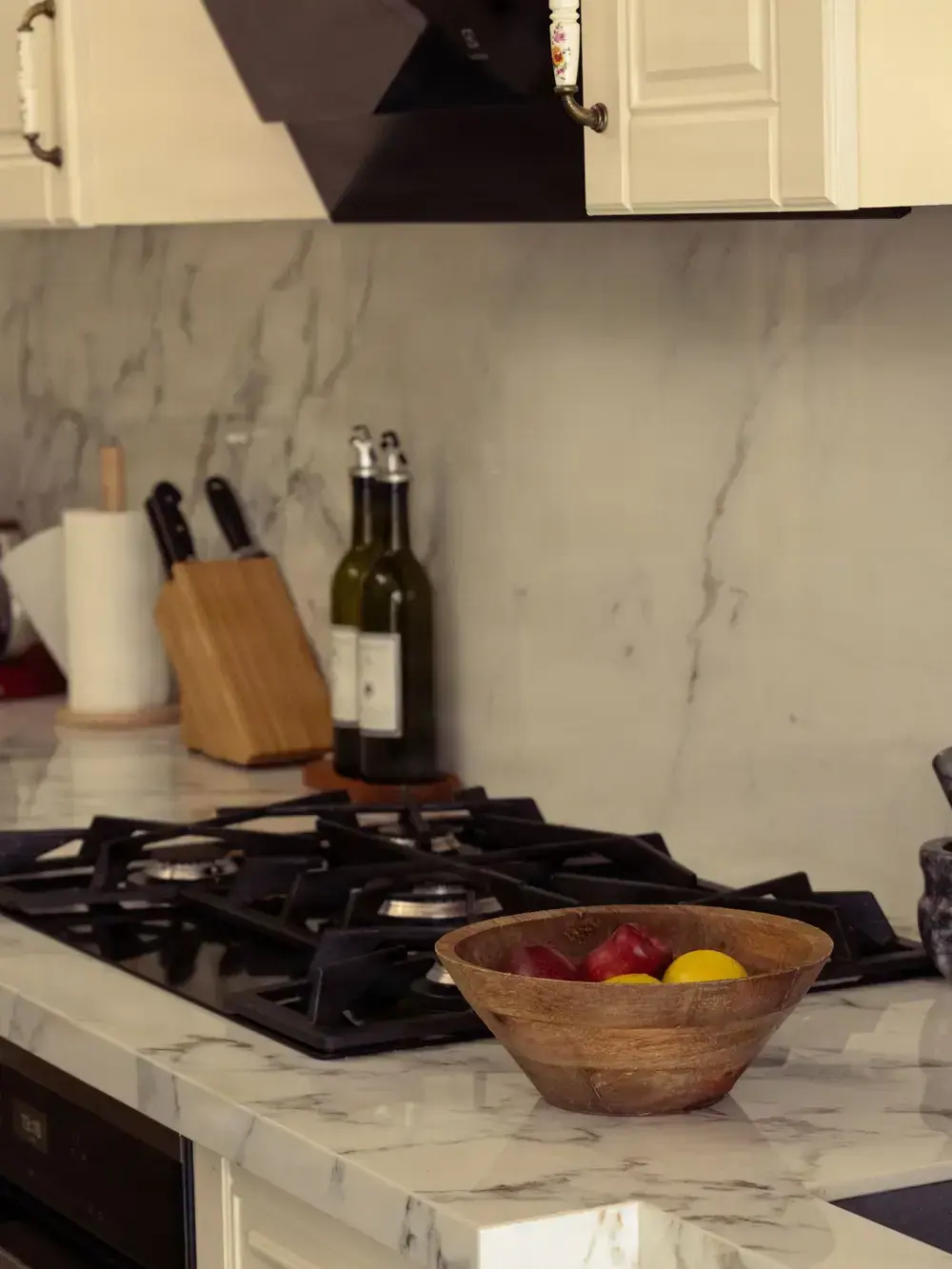
Marble is a natural metamorphic stone: limestone that heat and pressure turned crystalline. It is mostly calcite, which is calcium carbonate, and its veins come from the clay, iron and other minerals that were in the limestone. That chemistry decides almost everything about marble on a countertop.
Calcium carbonate reacts with acid. Lemon juice, vinegar, wine, tomato sauce, soda and some kitchen and bathroom cleaners dissolve a thin layer of the surface where they sit, and leave a dull, slightly rough spot. That mark is called etching. On a polished top it shows as a cloudy patch when light hits it at an angle.
Water leaves its own mark. Tap water carries dissolved minerals, and where drops dry around a faucet or under a soap dish they leave a white film. On most surfaces a mild acid such as vinegar lifts that film. On marble the same acid etches the stone under the film, so a pH-neutral cleaner, a soft cloth and a quick wipe around the faucet are the safe routine.
Etching vs Staining, in Plain Words
People mix up the two words, but they are different problems:
- Etching is a chemical mark. Acid has eaten into the surface, so the spot looks dull or lighter, not darker. Nothing soaked in, and no sealer prevents it.
- Staining is something that soaked in. Marble is porous, so oil, coffee, red wine or rust from a can left on the counter can wick into the stone and darken or color it.
- Scratches come from marble being soft. Calcite sits at about 3 on the Mohs hardness scale, against about 7 for quartz, so grit under a pan or the base of a ceramic mug can mark a polished top.
Honed or Polished Marble, and What Sealing Does
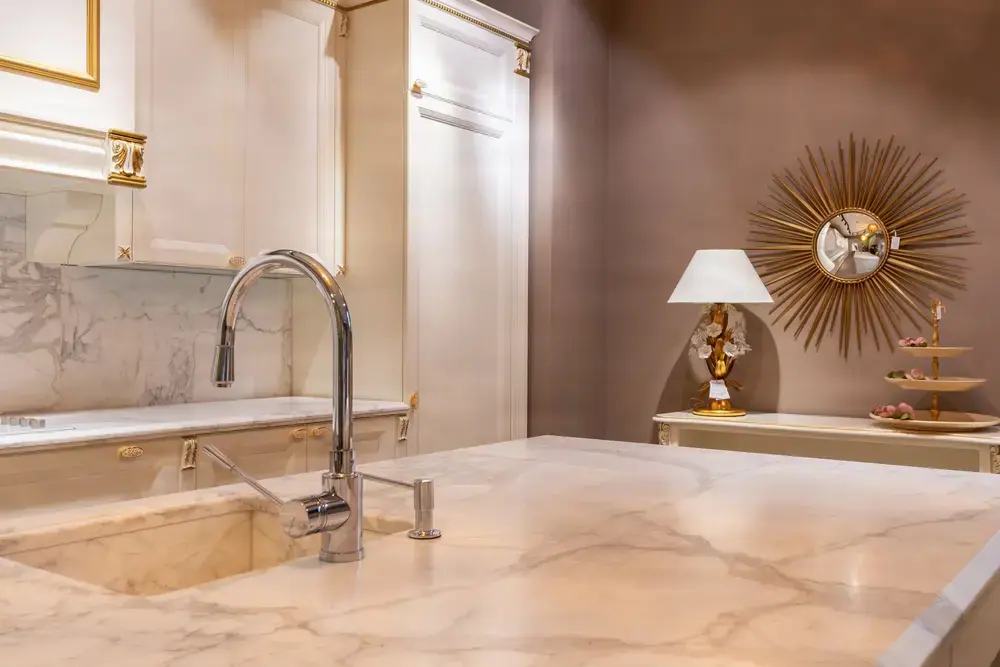
A polished finish is glossy and reflective and makes the veining look deep. It also shows every etch, because a dull spot stands out against the shine. A honed finish is ground flat and matte. Acids still etch it, but the marks blend into a surface that was never shiny, which is why honed is the usual advice for marble in a kitchen.
Sealing, in general terms: a penetrating sealer soaks into the pores and slows down how fast oil or wine gets in, which gives you time to wipe a spill. It does nothing against etching, because acid attacks the stone itself, not the pores. How often a top needs resealing depends on the marble and the room. A simple test is a few drops of water: if they darken the stone within a few minutes, the sealer has worn.
Edges matter on a soft stone too. A crisp square edge chips more easily than an eased, rounded or bullnose one, so for a kitchen or a vanity a softened profile is the practical choice. We finish the edge to the profile you pick.
Where Marble Does Well, and Where It Struggles
Marble is happiest where there is little acid and little hard wear:
- Bathroom vanities. Soap, steam and toothpaste are far gentler than a kitchen, which makes a vanity the easiest place to live with marble. Our bathroom countertops page covers vanity tops and sinks.
- A baking area. Marble stays cool to the touch, which is why bakers like it for rolling dough and working chocolate. A marble section set into a granite or quartz kitchen gives you that without marble at the sink.
- A fireplace surround. No food, no acid and little wear, so marble around a fireplace keeps its finish a long time.
- A low-traffic island or a bar used more for serving than for chopping, and window sills.
It struggles on the main prep counter between the sink and the cooktop of a busy kitchen, where lemons, wine, tomato and hot pans meet every day.
Are Marble Kitchen Countertops a Bad Idea?
Not a bad idea, but a choice with a known trade-off. A marble kitchen will etch and pick up small scratches, and a polished one shows them most. If you wipe spills quickly, use cutting boards and trivets and like a stone that shows its age, a honed marble kitchen can age well. If you want a top that looks the same in ten years as on the day it went in, marble is the wrong stone.
That is where a marble look in another material comes in. Quartz countertops come in Calacatta-look and Carrara-look patterns, white with gray or gold veins, and quartz does not etch, though its resin dislikes direct high heat. Porcelain countertops carry a printed marble pattern on a dense fired slab that resists acids and heat, with edges that need care. Plenty of homes end up with real marble on the vanity and a marble-look surface in the kitchen.
Onyx Countertops: Translucent and Softer Still
Onyx is on our list of stones too. The onyx cut into slabs is a banded calcite stone that forms from mineral-rich water, which is why it is often called onyx marble. Its bands run in honey, white, green and red tones, and it is translucent: light passes through it.
It is softer and more brittle than marble, scratches easily and etches the same way, and slabs often come backed with mesh or resin to hold them together while they are cut. So onyx goes where it is seen more than worked on: a bar top, a powder room vanity, a feature wall or the front panel of an island. Onyx is sometimes lit from behind so the bands glow, which is planned with an electrician before the stone is set.
Marble Countertops in Dallas, TX: What Decides the Cost
These are the things that decide what a marble top costs:
- The slab. Marble varies widely, and a common white with soft gray veins and a rare white with bold veining are far apart.
- Square footage and vein matching. Matching veins across a seam can take extra slab.
- Edge profile. An eased edge is the simplest; an ogee or a mitered edge takes more fabrication.
- Cutouts. Each sink, faucet hole and cooktop opening.
- Backsplash. A full-height marble backsplash uses far more stone than a short one.
- Removal and access. Taking out the old top, and how easily the slab reaches the room.
We work with your budget. Quality, precision, elegance: the words on our business card, and on a stone as soft as marble the precision part counts most. We serve homes and commercial projects across Dallas-Fort Worth, from Dallas to Richardson. Call (469) 478-0220 for a free estimate, or text (469) 315-6878.
Thinking About Marble for Your Home?
Call (469) 478-0220 for a free estimate.
Photos From Our Jobs
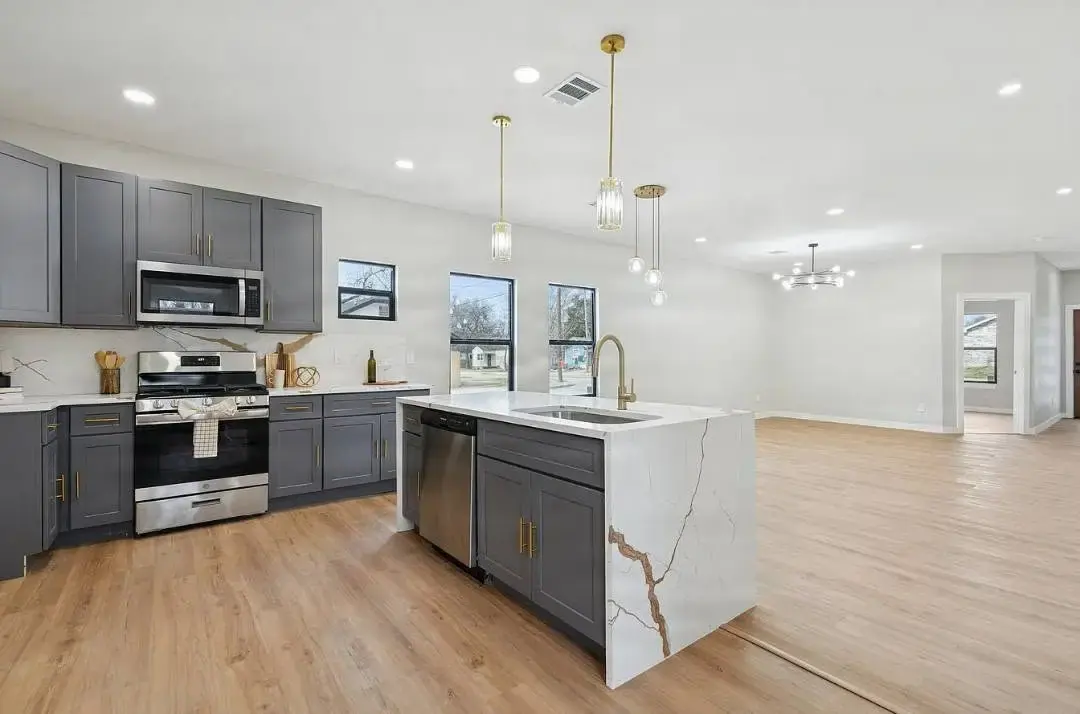
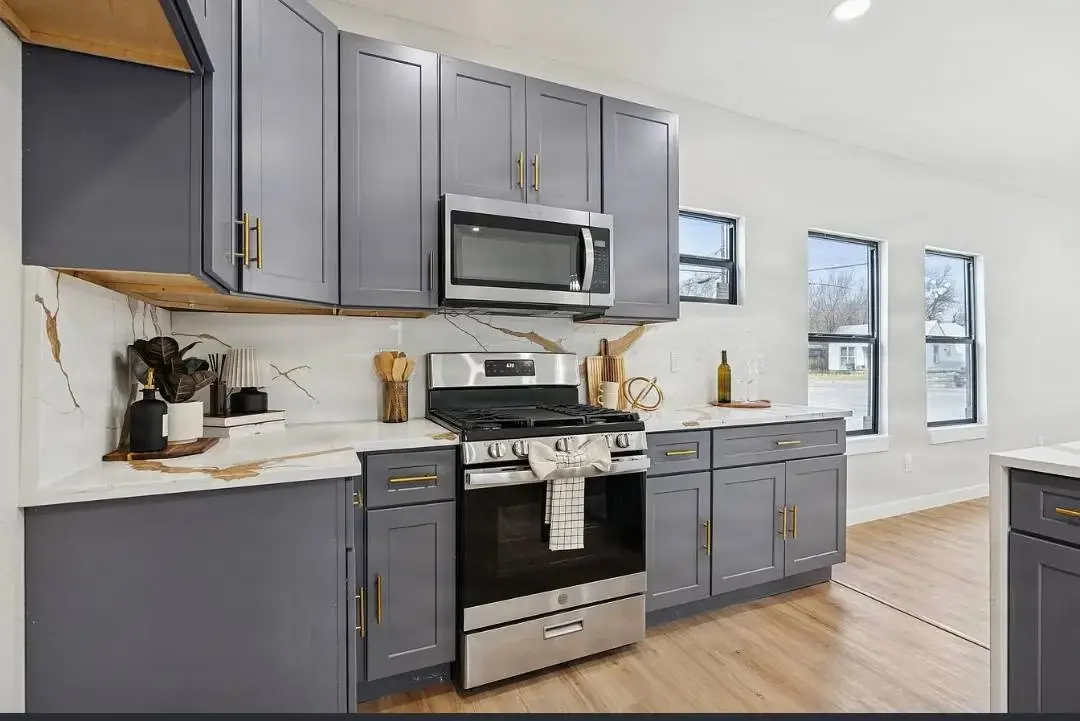
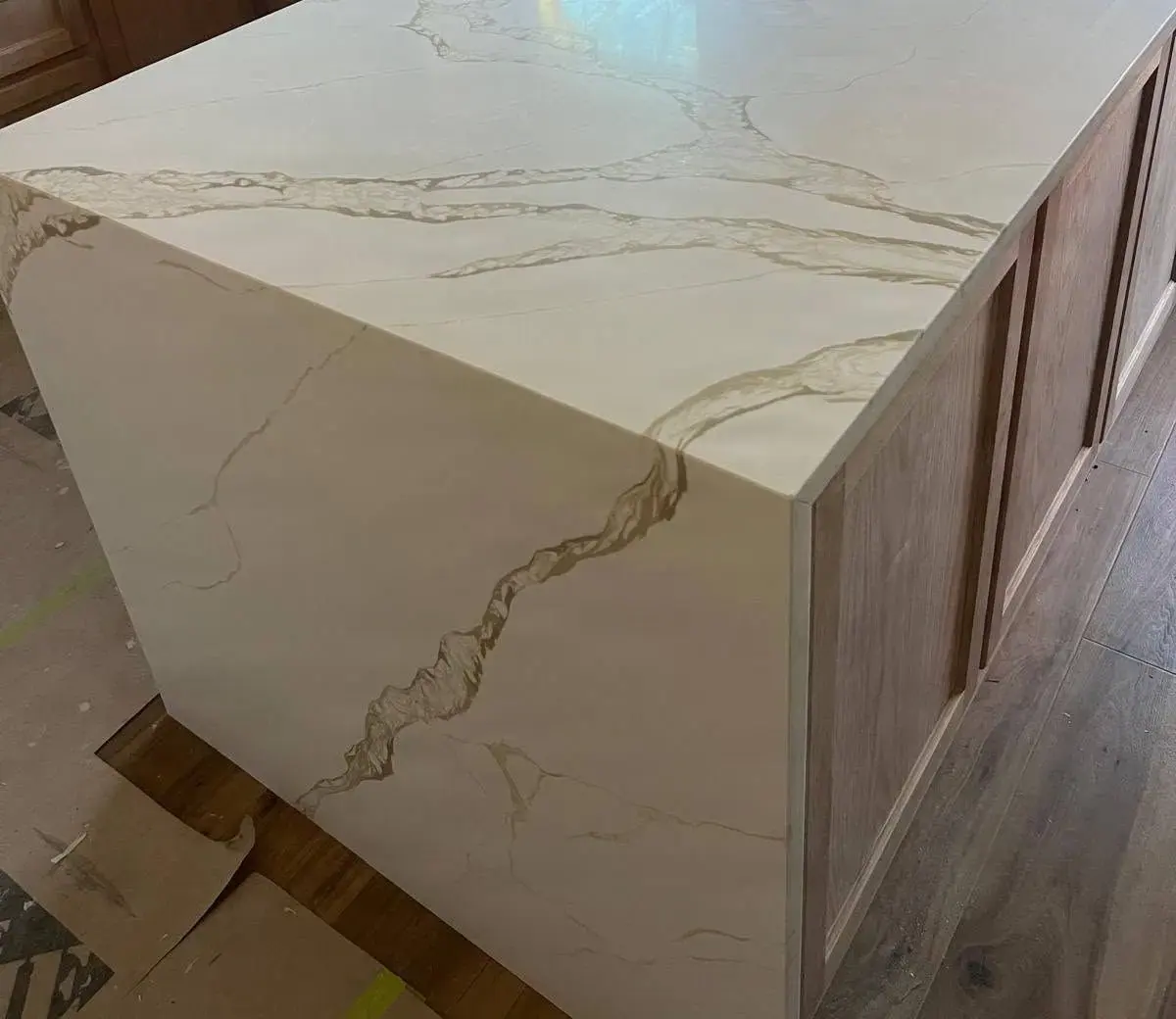
Every photo here is from one of our own jobs. Tap one to see it bigger.




Questions We Hear a Lot

-
It can be, if you accept that marble etches from acids like lemon, wine and vinegar and scratches more easily than granite or quartz. A honed finish hides etching far better than a polished one. If you want a kitchen top that never changes, a marble-look quartz or porcelain is the safer choice, and marble still works well on a vanity, a baking area or a fireplace.
-
They take more care than quartz or granite. Wipe acidic spills quickly, clean with a pH-neutral stone cleaner instead of vinegar or bathroom sprays, and use cutting boards and trivets. Sealing slows stains, but it does not stop etching.
-
Marble is a natural stone with no resin, so a warm dish will not burn it the way it can mark quartz. A very hot pan straight from the stove can still leave a mark, wear the sealer or crack the stone from sudden heat, so a trivet is the habit to keep.
-
It depends more on the slab than on the stone type: a common white marble and a rare one with bold veining are far apart, and the same is true of granite and quartz. Square footage, the edge profile, cutouts, the backsplash and removal of the old top decide the rest. We give you a free estimate after measuring; call (469) 478-0220.
-
Onyx is softer and more brittle than marble, scratches easily and etches from acids. It suits places where it is admired more than used: a bar top, a powder room vanity or a feature panel. For a working kitchen counter, granite, quartzite or quartz holds up far better.
-
Yes. Free estimates are available. Call (469) 478-0220 or use the contact form.
-
Dallas, TX and surrounding areas across Dallas-Fort Worth, with town pages for Plano, Frisco, Fort Worth, Arlington and more on our service area page. We also travel for commercial and multifamily projects. Call (469) 478-0220 to check your location.
Ready to Get Started?
Call Elite Stone Countertop Design at (469) 478-0220 for a free estimate.
-
-
- Free Estimates Call, text or email usFully insured
- Find Us Online


