 Call: (469) 478-0220


- Dallas Based
Serving Dallas–Fort Worth and all of Texas, and traveling for multifamily and commercial projects.
- Free Estimates
Over 14 years of experience, fully insured, residential and commercial. Call (469) 478-0220.
 Dallas Based
 Free Estimates
Porcelain Countertops
Porcelain slabs are the newest material on most countertop lists, and they answer a common question: what holds up to heat and sun without fading? Elite Stone Countertop Design fabricates and installs porcelain countertops along with granite, marble, quartz and quartzite, for kitchens, bathrooms, outdoor kitchens and commercial spaces across Dallas-Fort Worth. We come to your home for measurements and give free estimates. Call (469) 478-0220 to talk it through.
Porcelain Countertops for Dallas Sun and Heat

A Dallas summer is hard on surfaces. NOAA's 1991-2020 normals for the DFW airport count 106.2 days a year with a high of 90°F or more, and 20.3 days at 100°F or more. On an uncovered patio, a counter can sit in that sun for most of the day from spring into fall. Any surface with resin or organic pigment in it slowly pays for that in fading or yellowing.
Porcelain is fired at well over 2,000°F, and its colors come from mineral pigments fired into the slab, so the sun's UV does not bleach it and a hot afternoon is nothing to it. The same firing leaves a body that absorbs almost no water, under 0.5 percent by the usual definition of porcelain. That matters on the rare cold spell too: the same normals put the snow at just 1.6 inches a year, but when a freeze does come, there is next to no water inside the slab to freeze and crack it.
That makes porcelain a strong choice for outdoor kitchens and for sunny rooms inside: a breakfast nook under a west window, a sunroom bar, a counter beside a glass door.
What Porcelain Slabs Are
Porcelain slabs are made from fine clays, feldspar, sand and mineral pigments, pressed into very large, thin sheets and fired in a kiln. The result is dense and hard, and the slabs are thin: most often around 6, 12 or 20 mm, against the 2 and 3 cm of granite and quartz.
The pattern is made one of two ways. On many slabs it is printed on the surface, so the face shows marble veins or concrete or stone, while the body underneath is a plain color. On through-body slabs the color and some of the veining run through the thickness. The difference shows at the edge and at any chip: on a surface-printed slab, a cut edge or a chip reveals the plain body, which is why edge design matters so much with porcelain.
Thin Slabs: Edges, Cutting and Support
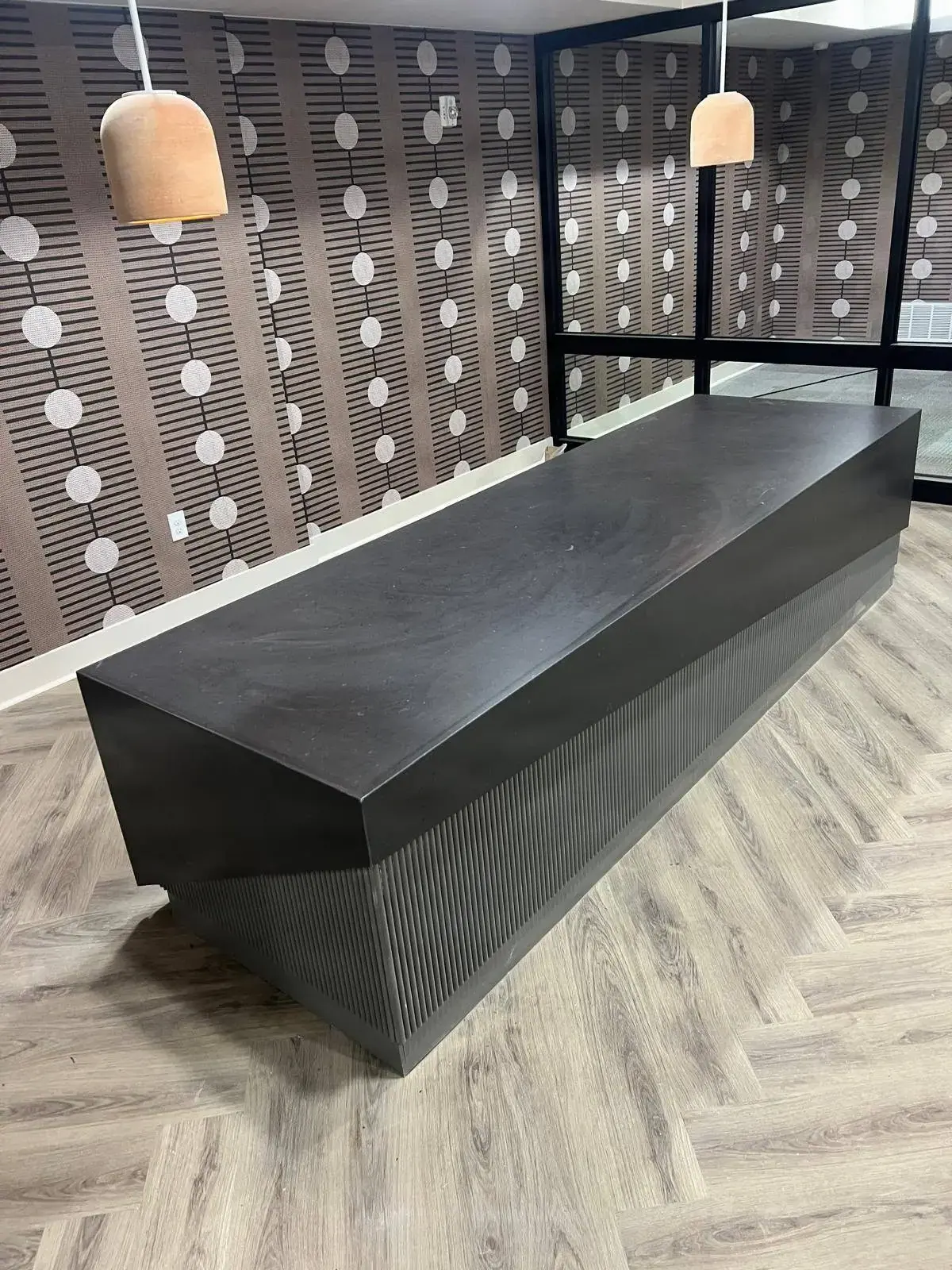
A thin slab changes how the top is built:
- Mitered edges. To look as thick as stone, a strip of the same slab is cut at 45 degrees and joined to the top edge, so the pattern wraps around the corner and the counter reads as 2 inches or more thick.
- Careful cutting. Porcelain is hard and holds internal tension from the kiln, so cuts go slowly, and sink and cooktop cutouts get rounded inside corners so a crack has nowhere to start.
- Handling. A large thin slab is carried upright and supported along its length. Lifted flat or twisted, it can snap.
- A flat, solid base. Porcelain does not forgive a high spot. Cabinets have to be level, and thinner slabs usually sit on a full flat deck over the cabinets. Seating overhangs need support sooner than with a 3 cm stone.
Once the top is set, a licensed plumber reconnects the sink, faucet and any gas line to a cooktop.
Heat, Scratches, Stains and Chips
In general terms, porcelain resists heat better than nearly any other countertop surface: it came out of a kiln. It is hard enough that a steel knife will not scratch it, though the porcelain will dull the knife, so a cutting board still makes sense. It does not need sealing, because there are no open pores for oil or wine to soak into, and acids from lemon or vinegar do not etch it.
The weak point is the edge. Porcelain is hard but brittle, so a heavy cast-iron pan dropped on a corner or a sharp knock on the edge can chip it. An eased or slightly rounded edge and a through-body slab make a chip less likely and less visible. Daily care is warm water and a mild soap.
Porcelain vs Quartz
People weigh the two because both give a marble or concrete look with little upkeep. Quartz countertops come in thicker slabs that are easier to shape, a small chip in quartz is easier to fill, and quartz is very forgiving in a kitchen. Its resin, though, dislikes direct high heat and long sun. Porcelain wins in heat and UV and outdoors, and it is thinner and lighter on the cabinets, but it takes more care to cut, set and edge, and a chip is harder to hide. Inside an air-conditioned kitchen either works; on a sunny patio porcelain is the safer pick of the two.
A Marble Look, a Backsplash and a Fireplace
Porcelain can come very close to a veined white marble, without marble's etching. If you love the look on our marble countertops page but cook with lemon and wine every day, a marble-look porcelain gives you the veins without the dull spots.
Thin, light slabs also go where heavy stone is awkward. A full-height backsplash cut from the same slab as the counter runs the pattern up the wall with very few seams. Around a fireplace, porcelain takes the heat and is light enough to clad the wall. Outside, our outdoor kitchen countertops page covers the base, the grill cutout and what a Texas patio asks of a top.
What Decides the Cost of Porcelain Countertops
These are the things that decide what a porcelain top costs:
- The slab. Its thickness, its size and whether the pattern is printed or runs through the body.
- Square footage. And how the pattern is matched across seams.
- Edge work. A mitered edge means cutting, joining and finishing a second strip, so it adds fabrication time.
- Cutouts. Each sink, faucet hole, cooktop or grill opening.
- Backsplash and wall panels. How much of the wall the slab covers.
- The base and removal. A flat deck over the cabinets, taking out the old top, and access to the room.
We work with your budget and keep competitive prices, on small and large projects alike. We serve homes, builders and commercial projects across Dallas-Fort Worth, from Dallas to McKinney. Call (469) 478-0220 for a free estimate, or text (469) 315-6878.
Is Porcelain Right for Your Project?
Call (469) 478-0220 for a free estimate.
Photos From Our Jobs
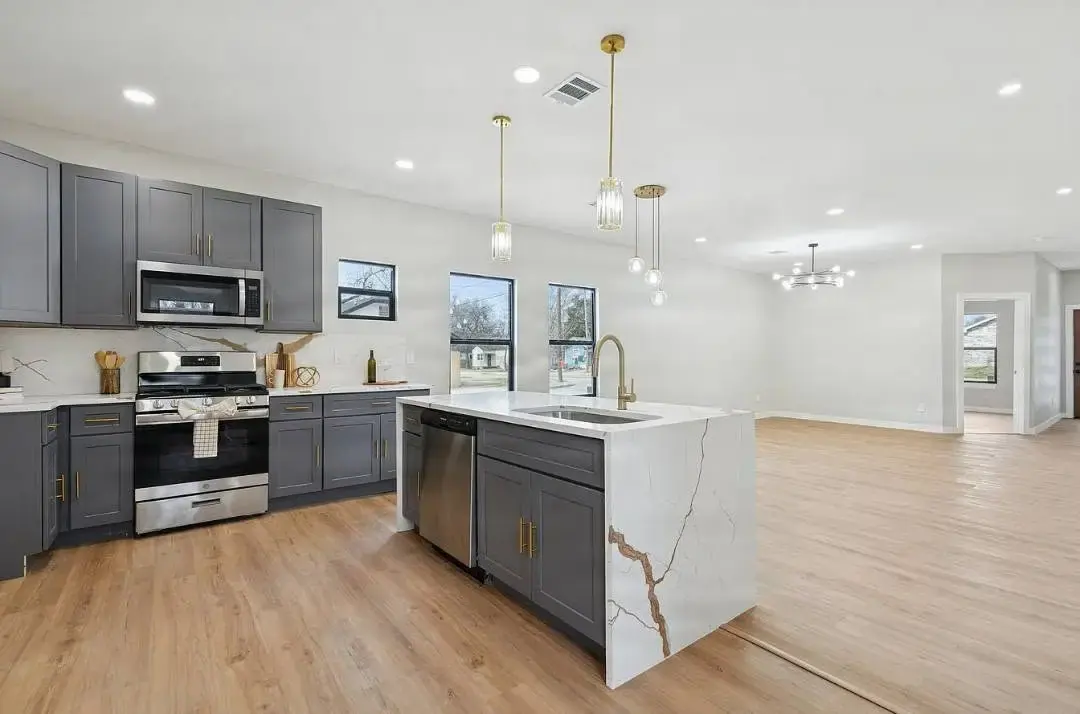
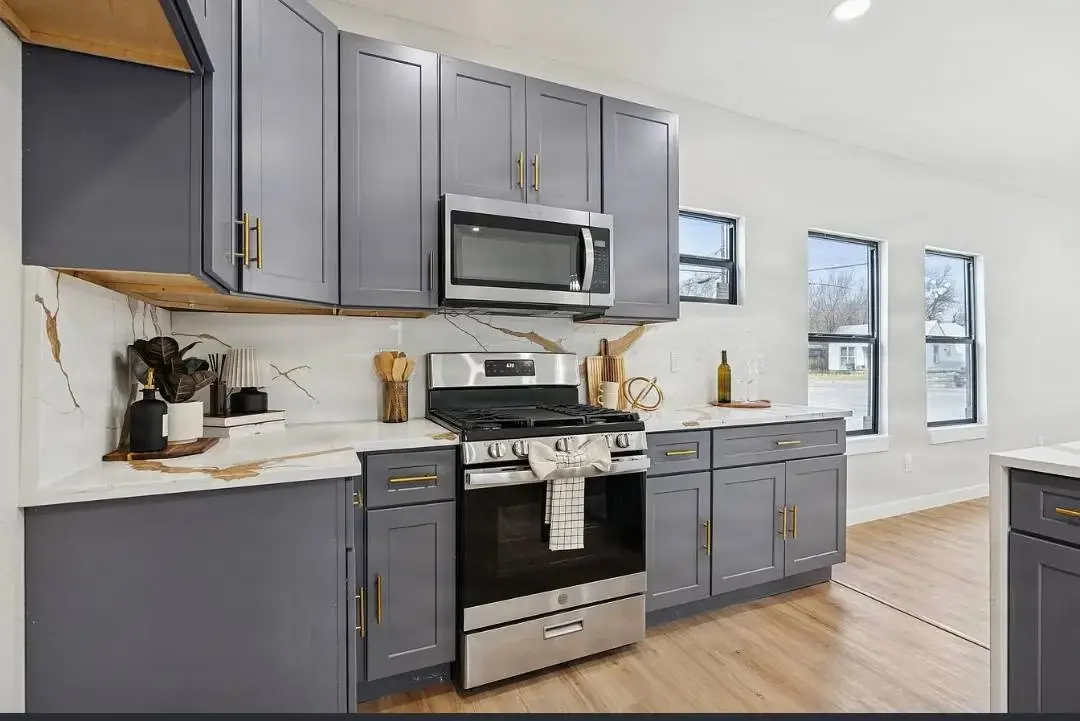
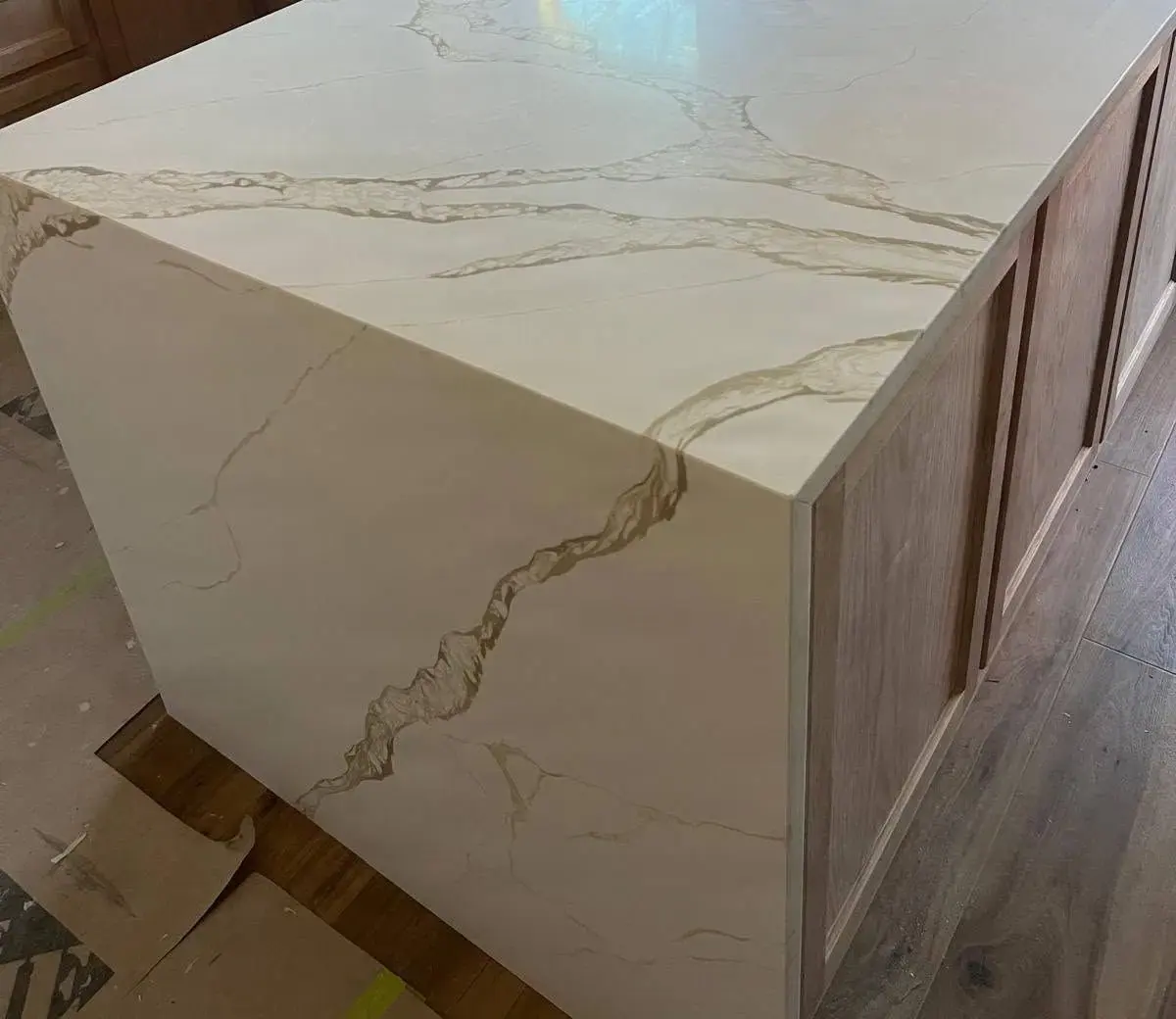
Every photo here is from one of our own jobs. Tap one to see it bigger.




Questions We Hear a Lot

-
Yes, in most ways. Porcelain resists heat, UV, scratches, stains and acids, and it needs no sealing. Its weak point is the edge: it is brittle, so a hard knock on a corner can chip it, and an eased edge or a through-body slab makes that less likely.
-
Very. Porcelain is fired at well over 2,000°F, so a hot pan or a Texas summer afternoon does not mark or fade it. A trivet is still kind to the surface and to the pan, and a sudden extreme temperature change is never good for any slab.
-
It depends on where the top goes. Porcelain takes heat and sun better and suits outdoor kitchens and sunny rooms. Quartz comes thicker, is easier to shape and repair, and is very forgiving in an indoor kitchen.
-
Not on the counter: once porcelain is set on a flat, solid base, it is hard and stiff. It is fragile in handling, because a thin slab can snap if it is lifted flat or twisted, and its edges can chip from a sharp knock. That is why cutting, carrying and setting porcelain take extra care.
-
Not as a rule. The slab, its thickness and pattern, the square footage, mitered edges, cutouts and the backsplash decide the cost, and porcelain often takes more fabrication time than stone. We measure and give you a free estimate; call (469) 478-0220.
-
Yes. Free estimates are available. Call (469) 478-0220 or use the contact form.
-
Dallas, TX and surrounding areas across Dallas-Fort Worth, with town pages for Plano, Frisco, Fort Worth, Arlington and more on our service area page. We also travel for commercial and multifamily projects. Call (469) 478-0220 to check your location.
Ready to Get Started?
Call Elite Stone Countertop Design at (469) 478-0220 for a free estimate.
-
-
- Free Estimates Call, text or email usFully insured
- Find Us Online


